Stinging insect activity peaks sharply across Jefferson County from late spring through October, driven by southern humidity and dense canopy vegetation near Red Mountain Park and Highland Park. Ground-nesting southern…
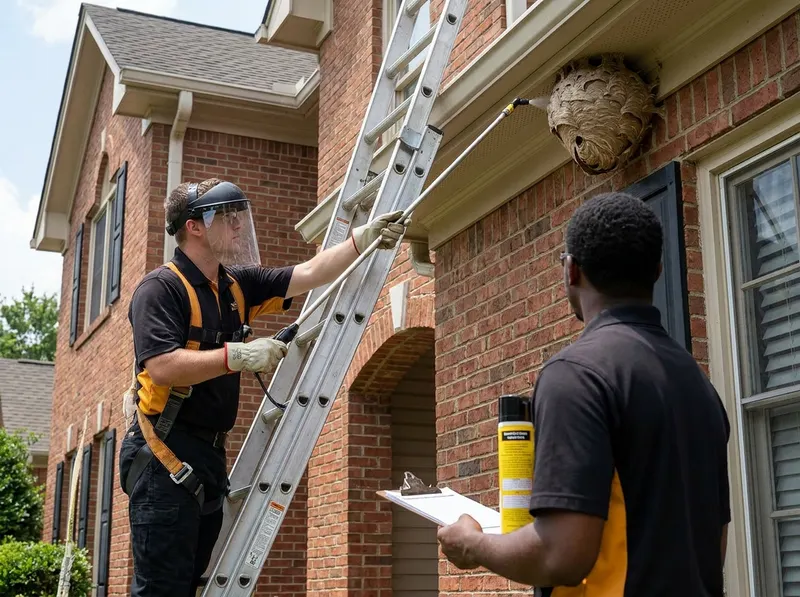
Stinging insect activity peaks sharply across Jefferson County from late spring through October, driven by southern humidity and dense canopy vegetation near Red Mountain Park and Highland Park. Ground-nesting southern yellow jackets frequently establish hidden colonies containing up to 4,000 workers inside rodent burrows or along limestone retaining walls in Glen Iris and Forest Park. Elevated structures in historic neighborhoods like Avondale and Crestwood North present distinct vulnerabilities along tongue-and-groove porch ceilings, attic soffits, and brick fascia where bald-faced hornets construct enclosed paper carton nests reaching 14 inches in diameter. Unplanned encounters with these species present immediate medical risks from repeated envenomation, as hornets and yellow jackets do not lose their stingers after a single strike.
Effective eradication requires targeted application rather than generic chemical broadcast sprays. Store-bought aerosol cans trigger alarm pheromones that agitate colonies before achieving lethal knockdown, frequently driving defensive insects into interior living rooms through unsealed window casings or soffit vents. Professional intervention applies direct specialized formulations into primary flight chambers during periods of minimal foraging activity. Physical removal of the carton structure immediately follows knockdown to eliminate residual pupae and prevent secondary infestations of carpet beetles or scavenger ants. For wood-boring or structural entry points near historic fascia boards in East Lake and Roebuck Springs, treatments integrate localized residual barriers to prevent subsequent fertile queens from re-establishing nests on the exact same timber footing.
Deciding between routine exterior treatment and urgent stinging insect removal depends entirely on nest location and species aggression. Paper wasps nesting under an isolated shed eave represent a moderate hazard, whereas bald-faced hornets near primary doorways or yellow jackets colonizing sub-siding voids require immediate mechanical and chemical elimination. Treating void nests inside wall cavities involves a crucial operational trade-off: simply dusting the entry hole without extracting the dead brood can lead to interior foul odors and moisture stains as the comb decomposes inside drywall. Professional extraction ensures both colony mortality and structural integrity.
Every job gets a firm, written price after a free on-site visit.
Tell us about your stinging insect removal job in Birmingham and we'll send a clear, written quote, usually the same day.
 Quervia Pest Control