Property owners seeking a reliable pest control service in Birmingham encounter distinct environmental pressures driven by dense summer humidity, mature hardwood tree canopies, and red clay soils. Residential neighborhoods from Forest Park to Glen Iris experience frequent pressure from subterranean termites, seasonal mosquitoes, German cockroaches, and invasive rodents seeking entry through utility penetrations.
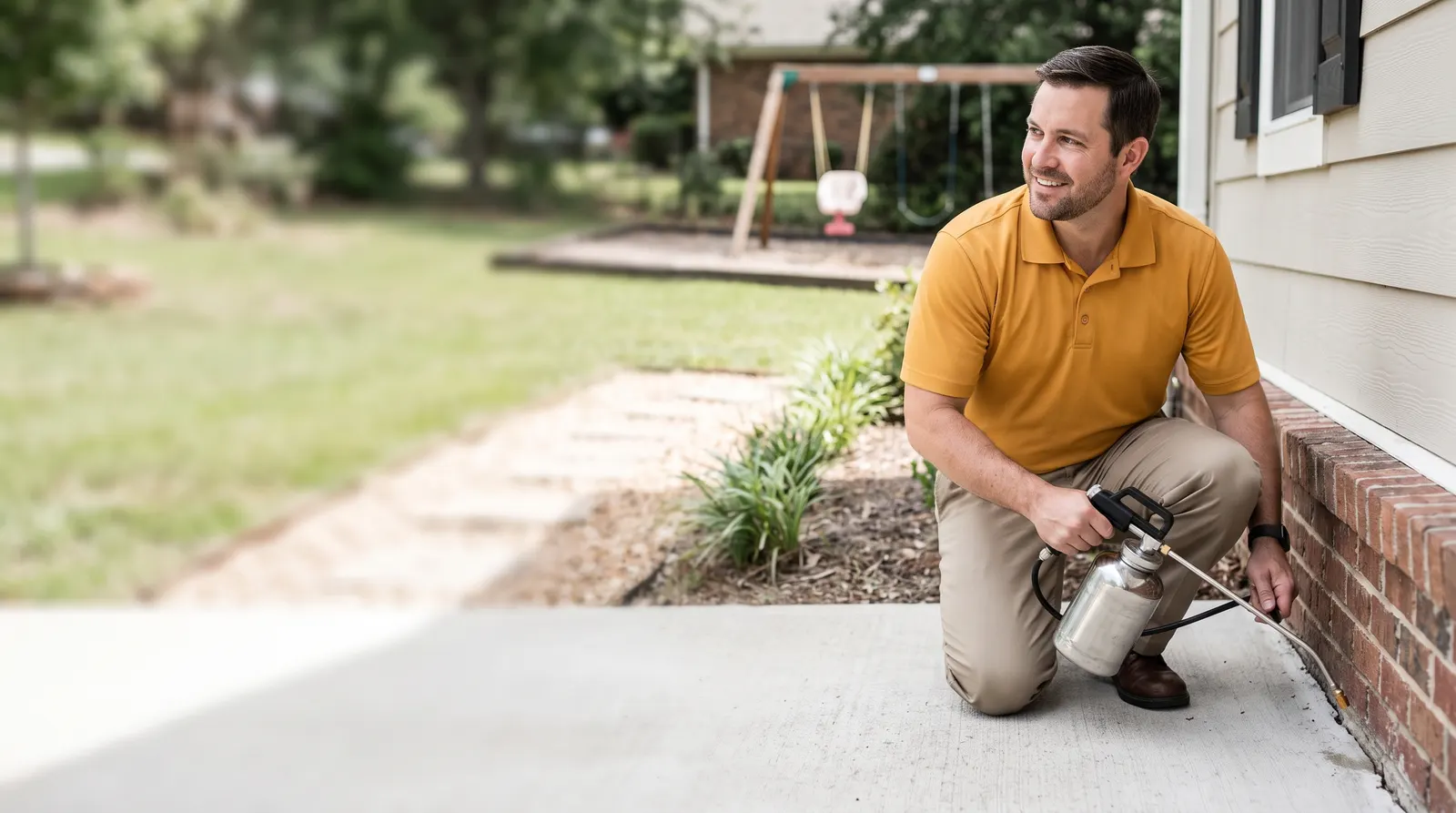
A pest control service in Birmingham is an integrated management discipline that eliminates structural and biological infestations across Jefferson County properties through localized soil treatments, barrier applications, and entry-point exclusions.
Every service reflects the same meticulous attention to detail, whether it's a single job or a larger pest control service project across Birmingham.
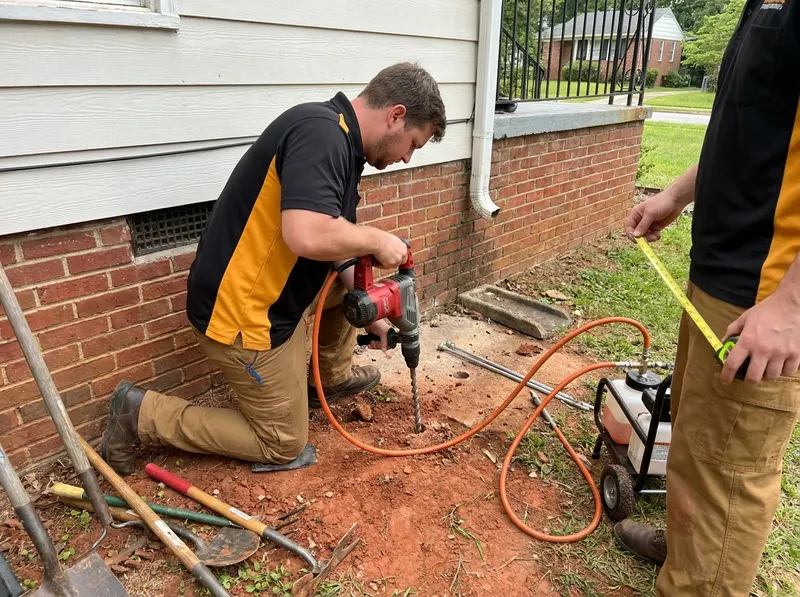
Subterranean termite control utilizes deep-trench liquid termiticide barriers along foundation perimeters combined with tamper-resistant baiting stations spaced at 10-foot intervals. Technicians excavate continuous six-inch trenches in native red clay soils to saturate foundation footings with non-repellent active ingredients like fipronil, which foraging worker termites transfer throughout the parent colony via social grooming. For properties with slab construction, specialized vertical drilling through interior utility slabs delivers chemical curtains directly beneath vulnerable plumbing penetrations where subterranean colonies gain hidden access to framing timbers.
Get a quote →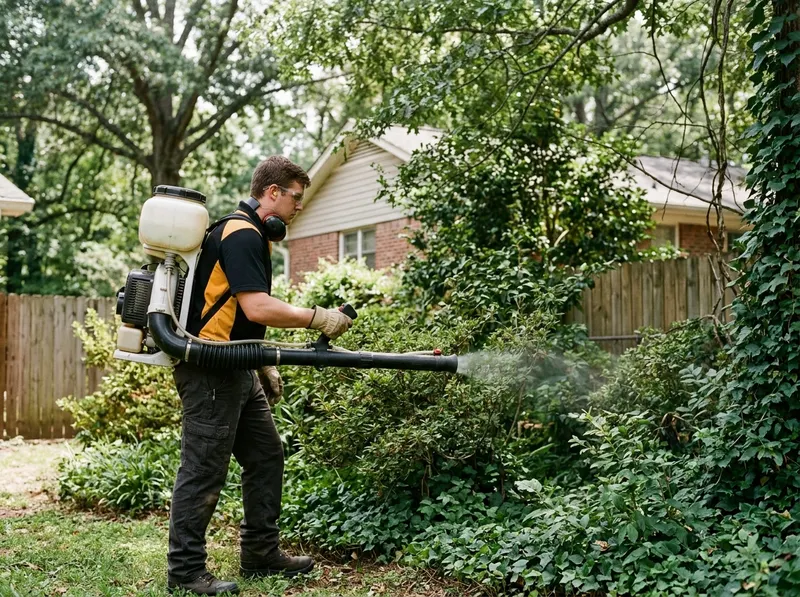
The mosquito suppression program deploys gas-powered backpack mist blowers delivering micro-encapsulated pyrethroids and botanical oils directly to resting harborage zones including dense shrubbery, groundcover ivy, and shaded porch overhangs. Technicians treat the undersides of broadleaf plants where Aedes albopictus mosquitoes rest during peak daytime heat while simultaneously applying biological Bacillus thuringiensis israelensis (BTI) larvicide rings to standing water in retention basins, landscape fountains, and low-lying drainage ditches to disrupt breeding cycles.
Get a quote →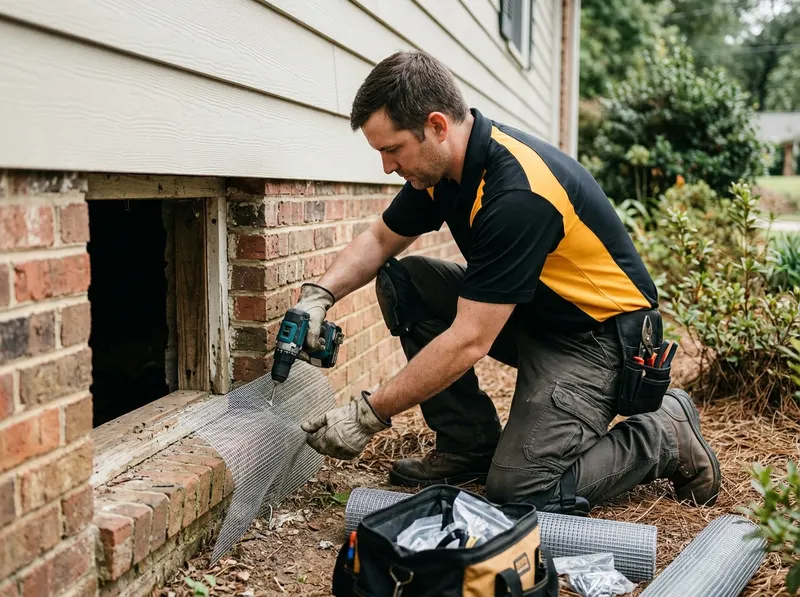
Rodent trapping and exclusion provides comprehensive structural defense against Norway rats, roof rats, and house mice through intensive mechanical remediation. Technicians map structural entry routes, positioning tamper-resistant snap-trap arrays within insulated attics, crawl space subfloors, and perimeter transit corridors. Complete physical exclusion involves bolting 1/4-inch galvanized steel hardware cloth across crawl space vents, packing stainless steel mesh into weep holes, and sealing foundation pipe voids with copper wire mesh encased in expanding polyurethane foam.
Get a quote →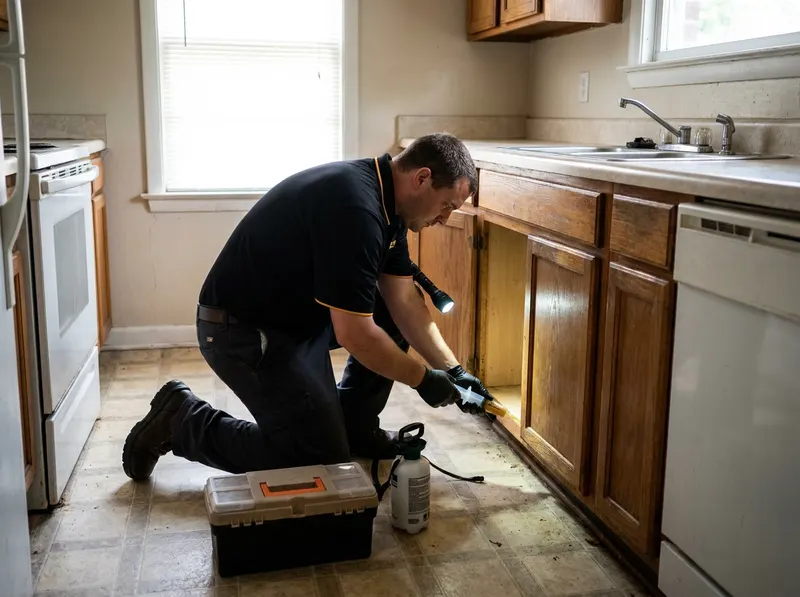
German cockroach cleanouts address heavy indoor infestations using targeted bait rotation matrices paired with insect growth regulators (IGRs) rather than repellent aerosol sprays. Technicians deposit pinhead-sized gel bait placements behind electrical faceplates, under refrigerator compressor trays, and inside hollow cabinet hinges where nymphs aggregate. The inclusion of juvenile hormone mimics stops reproductive development across multiple nymphal instars, collapsing reproducing populations within residential kitchens and multi-family plumbing chases.
Get a quote →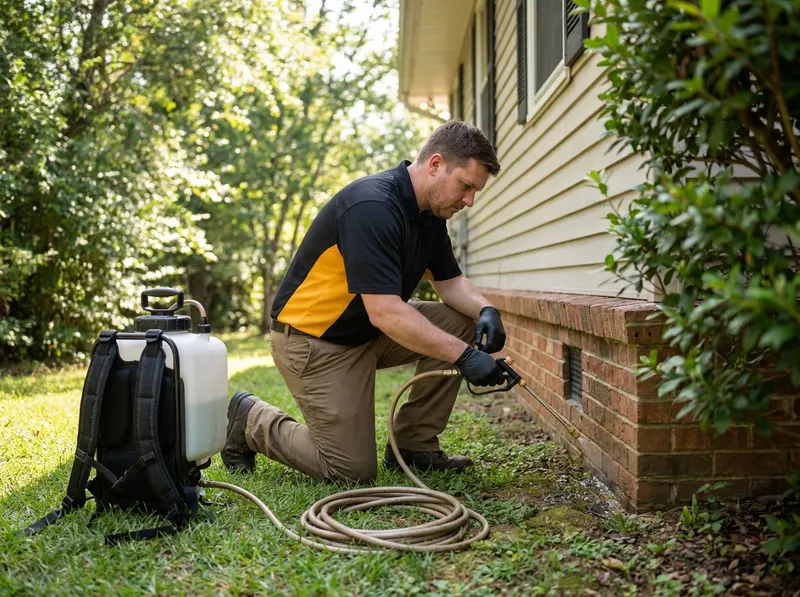
The quarterly crawling insect barrier establishes a three-foot upward and three-foot outward residual chemical shield around building perimeters to intercept smokybrown cockroaches, Argentine ants, and wolf spiders. High-volume hydraulic sprayers apply micro-encapsulated formulations to masonry weep holes, foundation corners, and door thresholds, creating a persistent contact zone that withstands summer rainfall. Technicians simultaneously sweep exterior eaves and overhangs with specialized telescoping dusting brushes to clear cobwebs and apply synthetic dusts into window weep tracks.
Get a quote →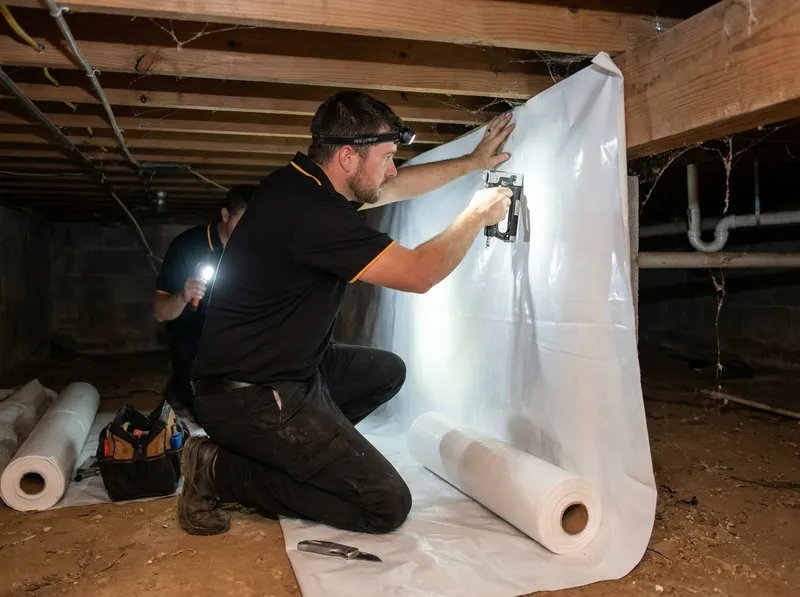
Crawl space moisture mitigation reduces high subfloor relative humidity that attracts subterranean termites, wood-boring beetles, and subterranean camel crickets. Crews clear debris and grade crawl space soil beds before rolling out heavy-duty 10-mil to 20-mil virgin polyethylene sheeting across 100 percent of exposed earth, taping every seam with waterproof acrylic adhesive. Technicians inspect foundation vents for cross-ventilation balance, seal unconditioned foundation openings, and install commercial dehumidifiers where crawl space relative humidity persistently exceeds 60 percent.
Get a quote →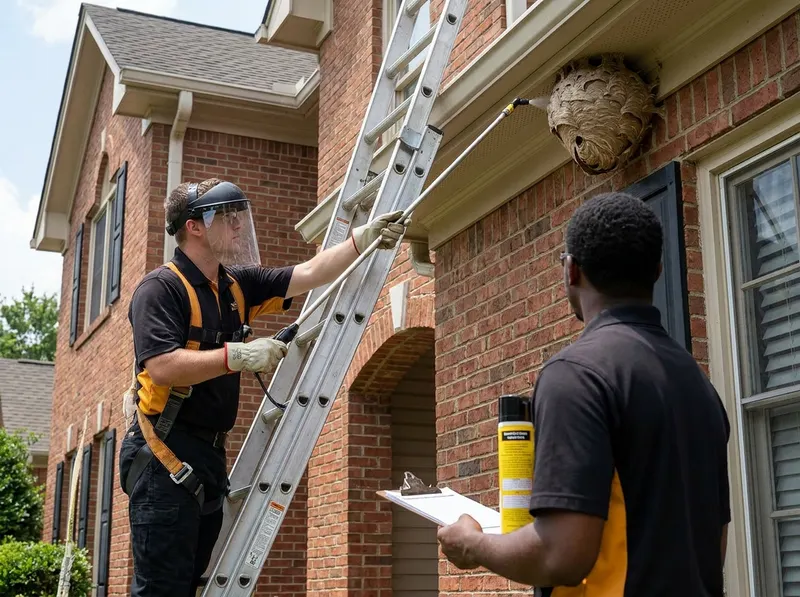
Stinging insect remediation safely neutralizes and removes elevated nests built by bald-faced hornets, European hornets, paper wasps, and aerial yellowjackets. Technicians employ specialized direct-injection aerosols alongside high-reach extension wands to deliver pyrethroid knockdown sprays directly into subterranean yellowjacket burrows or exterior roof eaves without structural damage. Following insect mortality, physical nests are cleanly detached and the substrate treated with residual repellents to deter new queens from re-establishing nests on identical architectural surfaces.
Get a quote →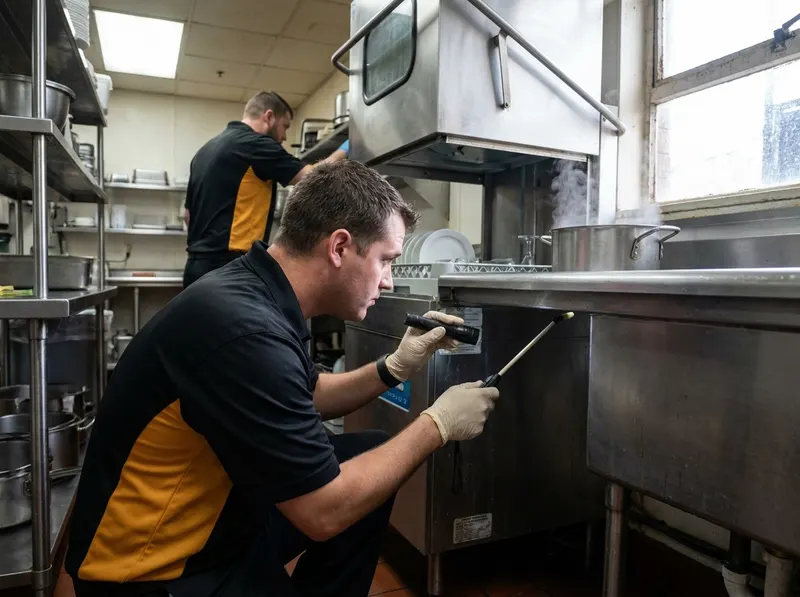
Commercial kitchen pest protocols supply health-department compliant pest containment tailored for restaurants, hospital cafeterias, and commercial food processors. Technicians treat commercial floor drains using biological enzymatic foam cleaners that digest organic grease cakes and sludge layers supporting drain fly breeding. The program integrates adhesive insect light traps positioned away from prep lines, rotational non-toxic bait boards beneath prep tables, and bar-code scanning stations that log insect population metrics for automated regulatory compliance.
Get a quote →You get a firm, itemized quote for your pest control service before any work begins, no surprises, no pressure.
Careful prep, tidy work, and a full cleanup when we are done. We treat your home and belongings like our own.
The same trusted, background-checked team from the first call to the final check.
Selecting an appropriate treatment depends entirely on structural vulnerability, insect biology, and geographic exposure across Birmingham's diverse landscape. If an owner discovers mud shelter tubes along exterior foundation stem walls, damaged sill plates, or hollowed baseboard trims, subterranean termite liquid defense or monitored baiting is required rather than surface spraying. The trade-off involves higher upfront stabilization costs to prevent catastrophic structural framing failures against the minimal labor of topical applications.
When a homeowner notices sawdust-like frass or pinhole exit openings in subflooring, drywood or powderpost beetle treatments take precedence, requiring structural borate wood injections rather than conventional soil trenching. If the property faces seasonal infestations of outdoor nuisance insects like Asian tiger mosquitoes or paper wasps, targeted barrier fogging and gutter standing-water treatment fit best; the trade-off is the requirement for monthly reapplication throughout Birmingham's humid months between May and September versus a one-time treatment. For indoor sightings of German cockroaches or roof rats, integrated interior baiting paired with structural exclusion sealing takes precedence over broad-spectrum broadcast spraying.
Broadcast sprays temporarily knock down visible roaches but drive colonies deeper into wall voids, whereas micro-encapsulated baits and silicone hardware cloth seal gaps permanently while requiring thorough sanitation compliance from the occupant. If structural pests like carpenter ants attack damp exterior fascia or window frames, targeted non-repellent transfer insecticides applied directly to active foraging trails outperform wide-area repellant sprays that simply divert workers into adjacent, untreated wall cavities.
Every project gets a firm, written price after a free on-site visit. Ranges below for orientation.
Tell us about your pest control service job and we'll send a clear, written quote, usually the same day. Or just call and talk to a real Birmingham pro.
(659) 272-4132
Properties situated along the slopes of Red Mountain, near Vulcan Park and Museum and the shaded parcels surrounding the Birmingham Botanical Gardens, experience intensified subterranean termite migration due to damp forest debris layers and shaded limestone-rich soil profiles. In older housing stock throughout Highland Park and East Lake, unsealed fieldstone foundations and original crawl spaces invite Norway rats and brown-banded roaches during sudden autumn temperature drops. Commercial properties around Sloss Furnaces National Historic Landmark and transit routes near Railroad Park and Legion Field require specialized perimeter rodent bait stations to handle migration driven by nearby rail corridors and industrial stormwater drainage systems. The heavily wooded residential pockets spanning Forest Park and Roebuck Springs face persistent carpenter bee and subterranean wood decay challenges caused by mature oak canopies that shed organic moisture onto cedar siding and wooden roof fascias. In historic bungalows across Avondale and Crestwood North, elevated pier-and-beam foundations allow ambient moisture to accumulate underneath living rooms, which accelerates the growth of micro-fungi that sustain silverfish and subterranean camel crickets throughout the wet winter months. Furthermore, properties adjacent to Village Creek and East Lake Park endure elevated seasonal mosquito hatching spikes beginning as early as late April, requiring targeted biological larvicide interventions across municipal ditch runoffs and perimeter garden swales to mitigate human exposure to vector-borne illnesses.
Free estimates for Birmingham & the surrounding area.
 Quervia Pest Control