Thermal bed bug remediation uses forced-air industrial heaters to raise ambient room temperatures past 122 degrees Fahrenheit, which is the lethal thermal death point for adult bed bugs, nymphs, and embryonic eggs. In…
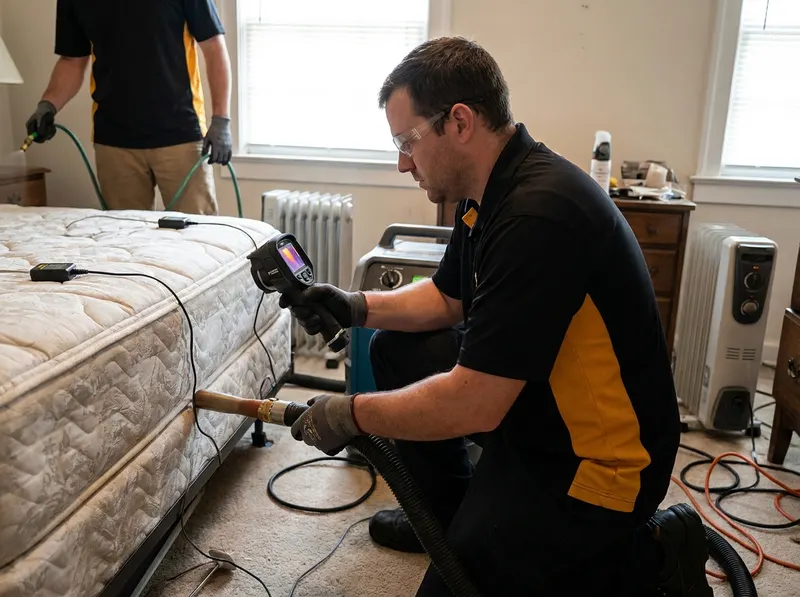
Thermal bed bug remediation uses forced-air industrial heaters to raise ambient room temperatures past 122 degrees Fahrenheit, which is the lethal thermal death point for adult bed bugs, nymphs, and embryonic eggs. In multi-family rental units across Five Points South and older historic framing found in Forest Park and Highland Park, heat penetrates deep inside wall voids, hardwood floor gaps, and heavy plaster where standard retail pyrethroid sprays fail. To prevent bed bugs from fleeing the rising thermal core toward adjacent cooler rooms, technicians apply an EPA-registered residual perimeter dust behind switch plates, along subfloors, and into baseboards prior to initiating the heat cycle. This dual-stage methodology eliminates the entire life cycle within six to eight hours without requiring homeowners to discard furniture.
Selecting between full-home thermal baking and focused chemical spot treatment depends on property construction and containment. If an infestation is restricted to one mattress in an isolated Glen Iris duplex, targeted chemical treatments alongside mattress encasements resolve the issue at lower cost. Conversely, if biting insects have migrated across shared walls in Crestwood North or multiple rooms in Roebuck Springs, whole-home thermal heat circulation is the correct intervention. The technical trade-off is equipment prep and sensitive-item protection: homeowners must remove wax candles, vinyl records, aerosol cans, and electronics from the heating zone before heating begins, whereas chemical-only methods permit items to stay but require two to three follow-up visits spaced 14 days apart to target freshly hatched nymphs.
1. Structural diagnostic inspection assesses room dimensions, mattress conditions, and insect harborage points. 2. Pre-treatment instructions guide the removal of meltable items, medications, and pets from the structure. 3. Industrial heaters and remote thermal monitoring sensors raise indoor temperatures to 125, 135 degrees Fahrenheit for a minimum of four sustained hours. 4. Targeted desiccant dust and non-repellent liquid barriers are applied inside wall cracks and furniture joints to seal exit paths. 5. A final post-treatment sweep verifies ambient cooling, thermal completion, and zero insect activity.
Every job gets a firm, written price after a free on-site visit.
Tell us about your bed bug heat and chemical remediation job in Birmingham and we'll send a clear, written quote, usually the same day.
 Quervia Pest Control