Residential yards across Jefferson County experience intense vector pressure from April through October, driven by 54 inches of annual rainfall, high relative humidity, and heavy shaded canopy coverage. In historic,…
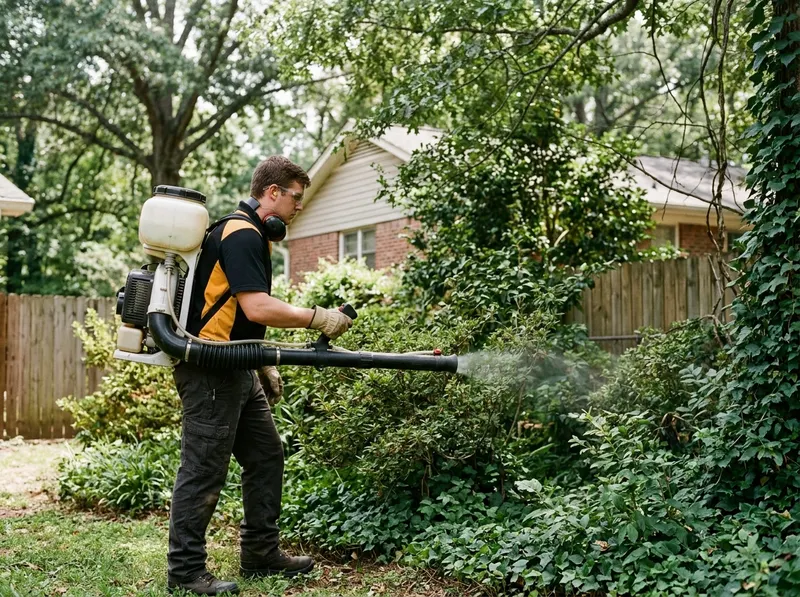
Residential yards across Jefferson County experience intense vector pressure from April through October, driven by 54 inches of annual rainfall, high relative humidity, and heavy shaded canopy coverage. In historic, mature-growth zones like Highland Park, Forest Park, and Glen Iris, dense ground ivy, stone retaining walls, and untamed boxwoods harbor adult Asian tiger mosquitoes during daytime heat. Meanwhile, residential properties bordering the aquatic drainage corridors of East Lake, Roebuck Springs, and Avondale contend with continuous Culex breeding in slow-draining culverts, clogged roof gutters, and shaded yard depressions. Standard DIY yard foggers dissipate within hours and leave toxic chemical drift over open turf, failing to resolve the insect cycle at the structural source.
A technical integrated pest management protocol bypasses blind, whole-yard broadcasts. Instead, application specialists target the precise biological resting zones where 90% of daytime adult mosquitoes harbor: the dense, underside foliage of broadleaf shrubs, perimeter tree canopies up to 10 feet high, under wooden deck stairs, and behind damp exterior foundational masonry. Applied micro-encapsulated synthetic pyrethroids or low-toxicity botanical formulas bind directly to the leaf cuticle without damaging delicate ornamental gardens. This perimeter barrier provides sustained residual suppression for 21 to 30 days against re-invading insects through direct contact.
Simultaneously, the program neutralizes the next reproductive cycle using targeted aquatic larvicides. Technicians identify and treat active standing water pockets, such as French drain catch basins, landscape birdbaths, unchlorinated water features, and sump discharge routes in Crestwood North and Crestwood South, using EPA-registered Bacillus thuringiensis israelensis (Bti). Bti produces targeted crystal proteins that kill feeding mosquito larvae within 24 hours while remaining non-toxic to domestic pets, native songbirds, honeybees, and aquatic wildlife. Addressing active stagnant water removes the trade-off of relying solely on heavy adulticide sprays.
Properties with open exposure to heavily wooded ravines, such as lots flanking Red Mountain Park or Sloss Furnaces runoff zones, require consistent 21-day treatment cadences to counter migration from untreated municipal buffer lands. For single-event protection, such as outdoor gatherings or lawn celebrations, barrier applications are applied 24 to 48 hours prior to guest arrival. All applications adhere to structural safety clearances, maintaining a strict 15-foot untreated buffer from active apiaries and open vegetable garden plots to preserve local pollinator integrity.
Every job gets a firm, written price after a free on-site visit.
Tell us about your mosquito suppression program job in Birmingham and we'll send a clear, written quote, usually the same day.
 Quervia Pest Control